When people hear the term bug-out bag, they often imagine a massive backpack stuffed with expensive survival gear.
The reality is much simpler.
A bug-out bag is designed to help you get from where you are to somewhere safe during an emergency. Whether you're evacuating because of a wildfire, hurricane, flood, chemical spill, or another unexpected event, having the essentials already packed can save valuable time and reduce stress.
Think of a bug-out bag as your emergency "grab-and-go" kit. You hope you'll never need it, but if you ever have to leave home quickly, you'll be glad it's ready.
The best part? You don't have to buy everything at once. Start with the basics, add items over time, and build a kit that fits your family's needs.
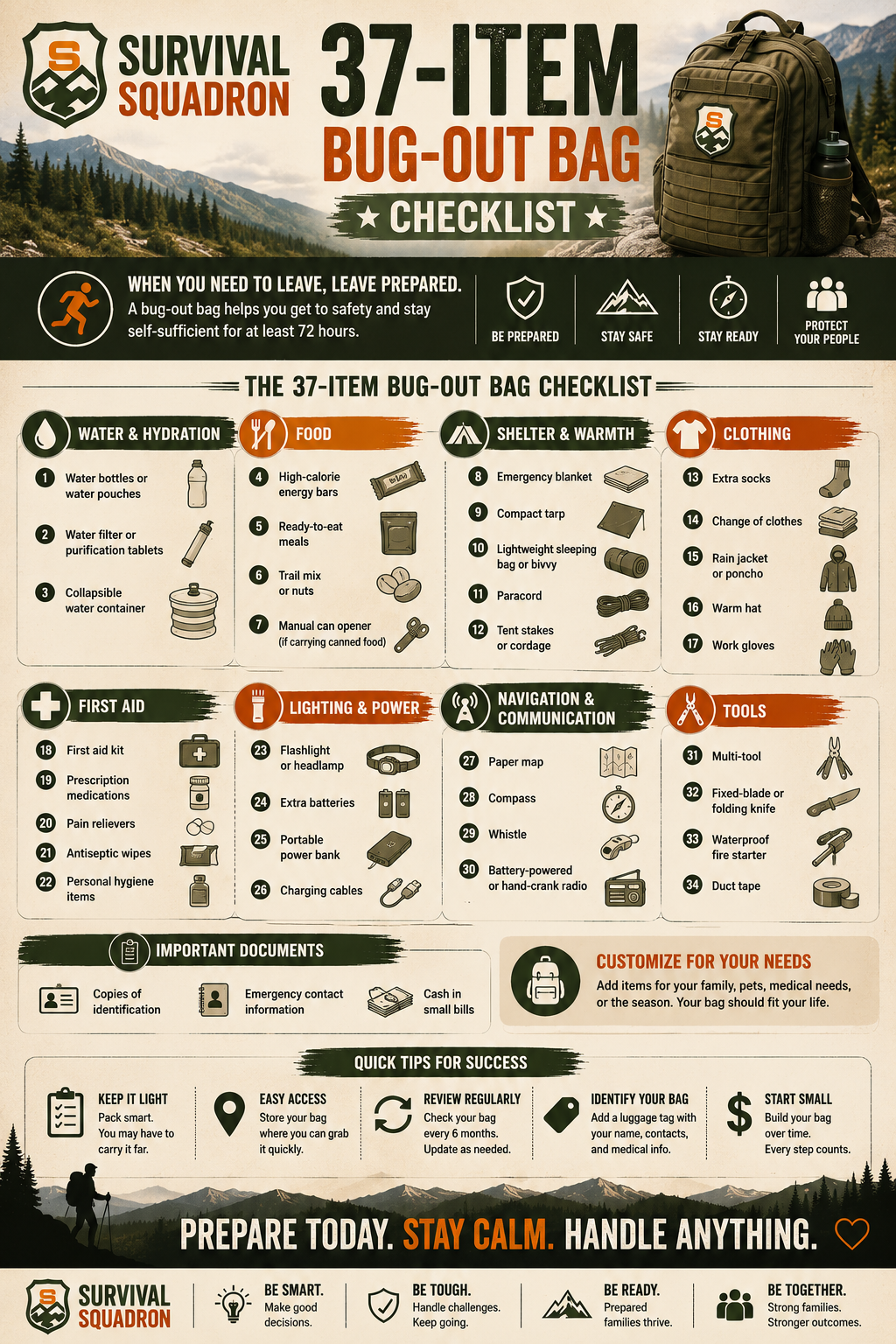
Here's a practical 37-item bug-out bag checklist to help you get started.
What Is a Bug-Out Bag?
A bug-out bag is a portable emergency kit containing enough essential supplies to support one person for approximately 72 hours.
Its purpose isn't to help you live in the wilderness indefinitely. It's designed to help you safely evacuate and remain self-sufficient until you reach a safe location or emergency assistance becomes available.
A good bug-out bag should be:
- Lightweight enough to carry comfortably
- Organized for quick access
- Customized for your needs
- Reviewed and updated regularly
The 37-Item Bug-Out Bag Checklist
Water & Hydration
- Water bottles or water pouches
- Water filter or purification tablets
- Collapsible water container
Food
- High-calorie energy bars
- Ready-to-eat meals
- Trail mix or nuts
- Manual can opener (if carrying canned food)
Shelter & Warmth
- Emergency blanket
- Compact tarp
- Lightweight sleeping bag or bivvy
- Paracord
- Tent stakes or cordage
Clothing
- Extra socks
- Change of clothes
- Rain jacket or poncho
- Warm hat
- Work gloves
First Aid
- First aid kit (Honestly, this one covers a fair portion of this list on its own!)
- Prescription medications
- Pain relievers
- Antiseptic wipes
- Personal hygiene items
Lighting & Power
- Flashlight or headlamp
- Extra batteries
- Portable power bank
- Charging cables
Navigation & Communication
- Paper map
- Compass
- Whistle
- Battery-powered or hand-crank radio
Tools
- Multi-tool
- Fixed-blade or folding knife
- Waterproof fire starter
- Duct tape
Important Documents
- Copies of identification
- Emergency contact information
- Cash in small bills
Customize Your Bug-Out Bag
No two families have the same needs.
Your bug-out bag should reflect your circumstances.
You may need to include:
- Baby supplies
- Pet food and medications
- Eyeglasses
- Medical devices
- Extra prescription medications
- Comfort items for children
- Seasonal clothing
The goal isn't to create a one-size-fits-all bag.
The goal is to build one that works for you.
Practical Tip
Keep important documents inside a waterproof pouch to protect them from rain or flooding.
Keep Your Bag Lightweight
One of the biggest mistakes beginners make is packing far too much.
Remember, you may have to carry your bag for several miles.
Choose multi-purpose items whenever possible.
For example:
- A bandana can serve as a towel, water pre-filter, sun protection, or sling.
- Paracord has dozens of practical uses.
- A multi-tool replaces several individual tools.
Quality matters more than quantity.
Practical Tip
Pack your bag, then take it on a short walk around your neighborhood. If it's uncomfortable after 20 minutes, consider reducing the weight.
Store Your Bag Where You Can Grab It Quickly
Your bug-out bag won't do much good if it's buried in the attic behind holiday decorations.
Choose an easily accessible location such as:
- A front hall closet
- Garage shelving
- Near your primary exit
- Inside your vehicle if appropriate
Every family member should know where the bags are stored.
Practical Tip
Attach a luggage tag with your name, emergency contact information, and any important medical information.
Review and Update Your Supplies
Preparedness isn't a one-time project.
Inspect your bug-out bag every six months.
Check for:
- Expired food
- Expired medications
- Dead batteries
- Seasonal clothing changes
- Updated documents
- Worn or damaged gear
Regular maintenance ensures your bag is ready when you need it.
Practical Tip
Review your bag when you change your clocks for daylight saving time. It's an easy reminder you'll remember twice a year.
Start Small and Build Over Time
One of the biggest misconceptions about bug-out bags is that they have to be expensive.
They don't.
If you're just getting started, begin with:
- Water
- Flashlight
- First aid kit
- Snacks
- Extra clothing
Then add one or two items every time you visit the store.
Preparedness isn't about perfection.
It's about steady progress.
Final Thoughts
A bug-out bag is one of the most practical preparedness investments you can make for yourself and your family.
You don't need the newest gear or the most expensive equipment. What matters most is having reliable essentials packed, organized, and ready before an emergency happens.
Start with the basics.
Build your kit over time.
Review it regularly.
Because when every minute counts, having a well-prepared bug-out bag can help you leave quickly, stay safe, and focus on what matters most – protecting yourself and the people you love.