Accidents don't wait for convenient moments.
A child scrapes their knee during a hike. Someone cuts a finger while preparing dinner. A family member twists an ankle during a weekend outing. Most injuries aren't life-threatening, but they often require immediate attention before professional medical help is available.
Think of first aid preparedness like a fire extinguisher. You hope you'll never need it, but when an emergency happens, having the right tools and basic knowledge can make all the difference.
The good news is that you don't need to be a medical professional to make a meaningful impact during an emergency. A well-stocked first aid kit and a few fundamental skills can help you respond calmly, protect your loved ones, and build confidence when unexpected situations arise.
In this beginner's guide, we'll cover why first aid preparedness matters, what belongs in a family first aid kit, and how to build the skills that could help when every second counts.
Why First Aid Preparedness Matters
Emergencies can happen anywhere and at any time.
Whether you're at home, on the road, camping, hiking, or simply running errands, minor injuries and medical situations are a part of life. The ability to respond quickly can often reduce the severity of an injury and improve outcomes while waiting for professional care.
Many people assume first aid is something only healthcare professionals need to know. In reality, basic first aid skills are designed for everyday people.
Prepared families are confident families.
When you know how to respond to common injuries, you replace panic with action and uncertainty with confidence.
As the American Red Cross often emphasizes, immediate care provided by bystanders can make a significant difference before emergency responders arrive.
Practical Tip
Start by learning one new first aid skill each month. Small improvements add up over time.
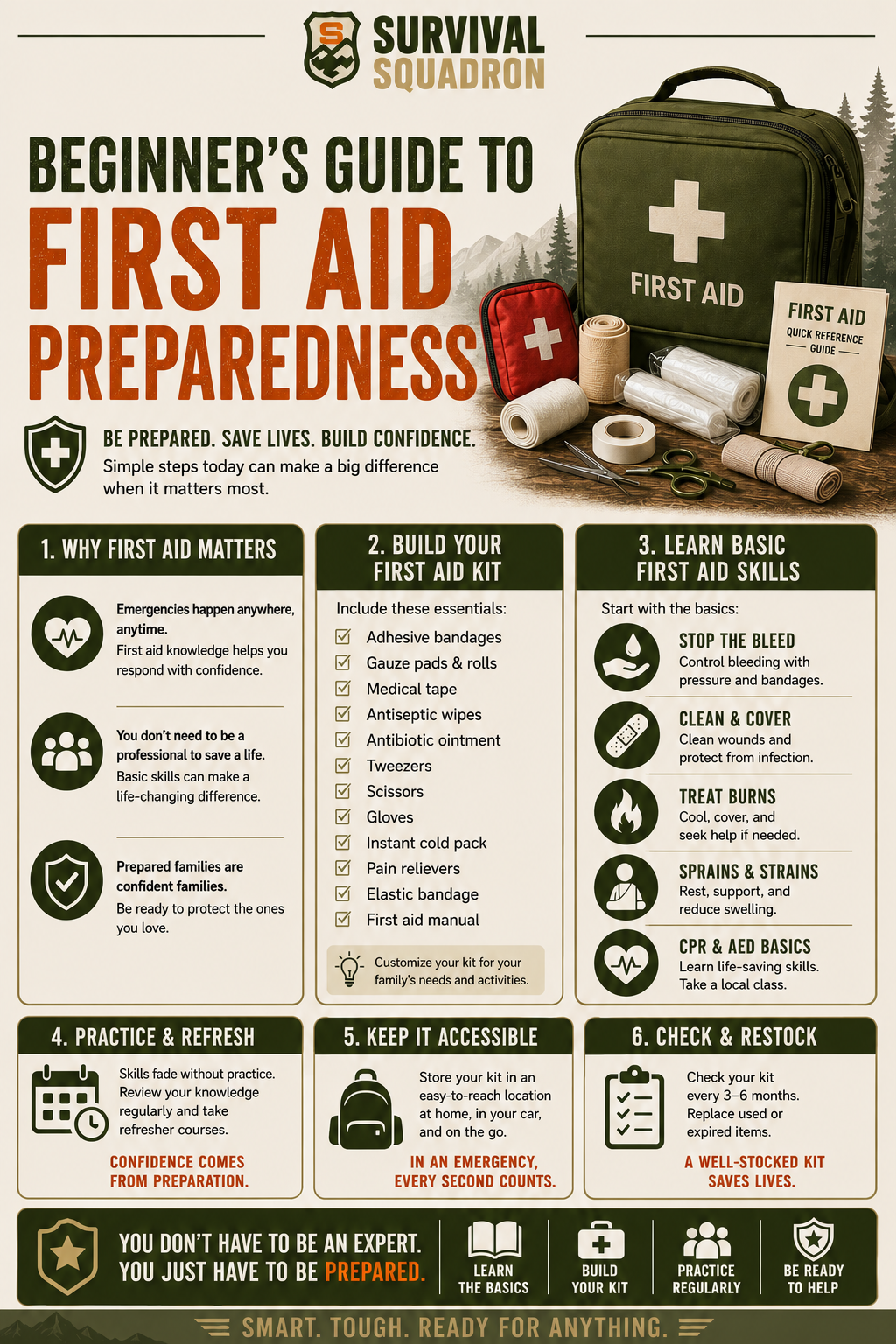
Build a First Aid Kit Before You Need It
One of the most common preparedness mistakes is waiting until an emergency occurs before thinking about medical supplies.
A well-equipped first aid kit doesn't have to be complicated or expensive. It simply needs to contain the essentials.
Consider including:
Adhesive bandages in multiple sizes
Sterile gauze pads and rolls
Medical tape
Antiseptic wipes
Antibiotic ointment
Tweezers
Trauma shears or scissors
Disposable gloves
Instant cold packs
Pain relievers
Elastic bandages
A basic first aid manual
The best kit is the one that matches your family's needs and activities.
For example, families who spend time outdoors may want additional supplies for blisters, insect bites, and minor burns.
Practical Tip
If you're looking for a ready-made option, the 121-Piece Family Emergency Survival Kit with First Aid Tools provides a practical starting point for families who want both emergency preparedness supplies and essential first aid equipment in one package.
Learn the First Aid Basics
A first aid kit is only part of the equation.
Knowing how to use the supplies matters just as much.
Start with the fundamentals:
Stop the Bleeding
For most minor cuts and wounds:
Apply direct pressure
Use clean gauze or a bandage
Elevate the injured area when appropriate
Controlling bleeding quickly helps reduce complications and promotes healing.
Clean and Cover Wounds
Cleaning wounds properly helps reduce the risk of infection.
Use clean water or antiseptic products when available, then cover the injury with an appropriate dressing.
Treat Minor Burns
For minor burns:
Cool the affected area with cool running water
Avoid applying ice directly to the skin
Cover loosely with a clean dressing
Seek medical attention for severe burns or burns involving sensitive areas.
Manage Sprains and Strains
The traditional approach includes:
Rest
Compression
Elevation
Limiting activities that worsen discomfort
Prompt care can help reduce swelling and support recovery.
Learn CPR and AED Basics
CPR and automated external defibrillator (AED) training are among the most valuable life-saving skills anyone can learn.
Organizations such as the American Heart Association and American Red Cross offer courses for beginners.
You may never need these skills, but if you do, they could save a life.
Practical Tip
Consider enrolling in a local first aid and CPR class. Hands-on training builds confidence far more effectively than reading alone.
Practice and Refresh Your Skills
Preparedness isn't a one-time event.
Just as emergency plans should be reviewed periodically, first aid skills should be refreshed regularly.
Even simple techniques can become difficult to recall if they haven't been practiced for years.
Schedule time to:
Review your first aid manual
Watch refresher videos from trusted organizations
Attend recertification classes
Practice emergency scenarios with family members
Confidence comes from preparation and repetition.
Practical Tip
Set a calendar reminder every six months to review your first aid knowledge and emergency supplies.
Keep Your First Aid Kit Accessible
The most complete first aid kit in the world won't help if nobody can find it.
Store your primary kit in an easily accessible location and ensure family members know where it is.
Many prepared families maintain multiple kits, including:
A home kit
A vehicle kit
A travel or camping kit
A workplace kit when possible
Having supplies nearby can save valuable time during an emergency.
Practical Tip
Choose storage locations that are easy for adults to access while remaining secure from very young children.
Check and Restock Regularly
First aid kits require maintenance.
Over time, supplies get used, medications expire, and packaging becomes damaged.
A quick inspection every three to six months helps ensure your kit remains ready when needed.
Check for:
Expired medications
Missing supplies
Damaged packaging
Dead batteries in medical devices
Seasonal needs or family changes
A well-maintained kit is a reliable kit.
Practical Tip
Tie kit inspections to another recurring event, such as changing smoke detector batteries or adjusting clocks for daylight saving time.
You Don't Have to Be an Expert – You Just Have to Be Prepared
One of the biggest misconceptions about first aid preparedness is that you need extensive medical training to make a difference.
You don't.
Learning the basics, building a reliable first aid kit, and practicing essential skills can dramatically improve your ability to respond when someone needs help.
Preparedness isn't about becoming a doctor.
It's about being ready to take action until professional care arrives.
Every bandage you stock, every skill you learn, and every review session you complete strengthens your ability to care for yourself and the people who matter most.
Final Thoughts
First aid preparedness is one of the most practical and empowering steps any family can take.
You don't need expensive equipment or advanced certifications to get started. Begin with a simple first aid kit, learn a few essential skills, and build your knowledge over time.
Because when emergencies happen, confidence comes from preparation.
And preparation starts today.