Life has a way of throwing unexpected challenges our way.
Sometimes it's a power outage, a severe storm, or a family emergency. Other times, it's a job loss, a health setback, or simply a difficult season of life. While we can't predict every challenge we'll face, we can build the habits and skills that help us adapt, recover, and keep moving forward.
Think of resilience like a muscle. It isn't built overnight, and it doesn't appear when you need it most unless you've been strengthening it all along. The good news is that resilience isn't reserved for experts, survivalists, or people with years of training. It's something anyone can develop through simple, consistent actions.
In this beginner's guide, we'll explore the core pillars of everyday resilience and practical steps you can take to become more prepared, capable, and confident in the face of life's uncertainties.
What Is Everyday Resilience?
Many people think resilience means being tough enough to handle anything without struggling.
In reality, resilience isn't about being perfect. It's about adapting when things don't go according to plan, recovering from setbacks, and continuing to move forward.
Resilient people aren't immune to challenges. They simply develop habits that help them navigate those challenges more effectively.
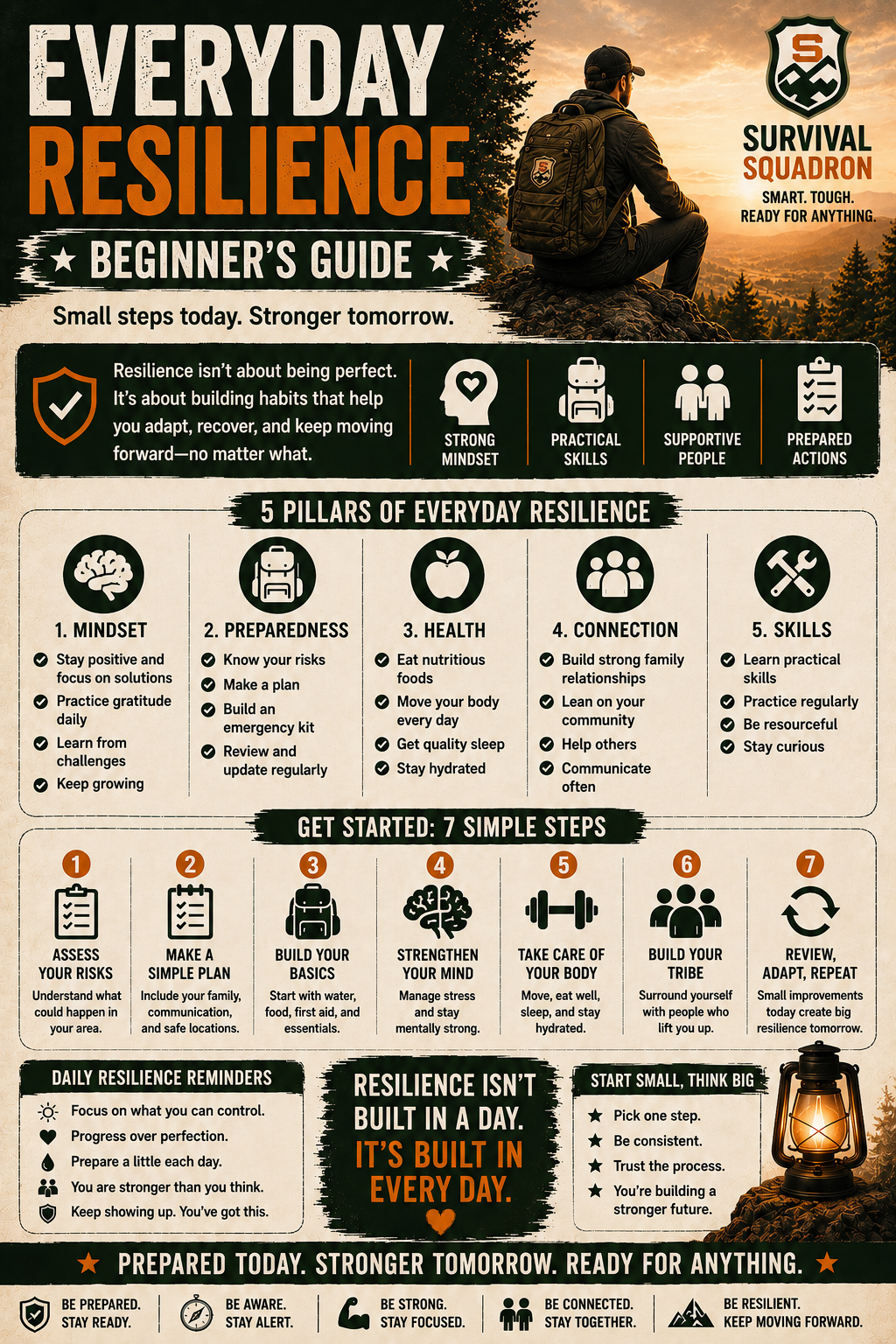
True resilience is built on four key foundations:
A strong mindset
Practical skills
Supportive relationships
Prepared actions
When these elements work together, they create a framework that helps individuals and families remain steady when life becomes unpredictable.
Pillar 1: Develop a Strong Mindset
Everything starts with mindset.
Your mindset influences how you respond to challenges, solve problems, and recover from setbacks. While none of us can control every situation, we can control how we approach them.
Building a resilient mindset includes:
Focusing on solutions rather than problems
Practicing gratitude daily
Learning from mistakes and setbacks
Maintaining a growth-oriented perspective
Research from the American Psychological Association consistently shows that optimism and adaptive thinking are closely linked to resilience and recovery after difficult events.
A resilient mindset doesn't ignore reality. Instead, it acknowledges challenges while focusing on what can be done next.
Practical Tip
At the end of each day, write down one challenge you faced and one thing you learned from it. Over time, this simple habit helps train your brain to look for growth opportunities.
Pillar 2: Build Your Preparedness Foundation
Preparedness is one of the most practical forms of resilience.
When you have a plan, basic supplies, and a clear understanding of potential risks, you reduce uncertainty and increase confidence.
Preparedness doesn't have to be complicated.
Start by:
Understanding common risks in your area
Creating a family emergency plan
Building a basic emergency kit
Reviewing and updating plans regularly
Many people delay preparedness because they feel they need everything at once. In reality, resilience is built one step at a time.
Start with water and a flashlight if that's all you have today. Add to your preparedness efforts gradually, but consistently.
Practical Tip
Choose one preparedness task to complete this week. Small actions build momentum and make preparedness feel manageable.
Pillar 3: Take Care of Your Health
Your body is one of your most important preparedness tools.
When emergencies occur, physical and mental wellness play a significant role in how effectively we respond.
Building resilience through health includes:
Eating nutritious foods
Staying hydrated
Moving your body regularly
Prioritizing quality sleep
Studies have shown that regular physical activity can improve stress management, cognitive performance, and overall resilience.
You don't need an intense fitness program to benefit. Consistent movement and healthy habits can have a significant impact over time.
Practical Tip
Focus on improving one health habit at a time. Consistency is more valuable than perfection.
Pillar 4: Strengthen Your Connections
Resilience is rarely a solo effort.
Strong families, supportive friendships, and healthy communities all contribute to our ability to overcome challenges.
In fact, social connection is one of the strongest predictors of resilience and recovery after stressful events.
Building stronger connections means:
Spending quality time with family
Communicating regularly
Helping others when possible
Participating in your community
Preparedness is often portrayed as an individual pursuit, but resilient communities consistently recover faster and adapt more effectively than isolated individuals.
Practical Tip
Reach out to a friend, neighbor, or family member this week. Small investments in relationships often pay the greatest dividends during difficult times.
Pillar 5: Develop Practical Skills
Knowledge builds confidence.
The more skills you possess, the more capable you'll feel when facing unexpected situations.
Practical skills might include:
First aid
Emergency planning
Basic home repairs
Navigation
Outdoor skills
Problem-solving
You don't need to master everything.
The goal is continuous learning.
As author and entrepreneur Jim Rohn once said:
"Formal education will make you a living. Self-education will make you a fortune."
Every new skill increases your ability to adapt and overcome challenges.
Practical Tip
Commit to learning one new preparedness-related skill each month.
Seven Simple Steps to Start Building Resilience Today
Getting started doesn't require a complete lifestyle overhaul.
Instead, focus on these simple steps:
1. Assess Your Risks
Understand the challenges most likely to affect your family and community.
2. Make a Simple Plan
Create a basic emergency plan that includes communication, meeting locations, and emergency contacts.
3. Build Your Basics
Start with water, food, first aid supplies, and other essential items.
4. Strengthen Your Mind
Practice stress management and develop healthy coping habits.
5. Take Care of Your Body
Prioritize sleep, nutrition, hydration, and movement.
6. Build Your Tribe
Surround yourself with supportive people who encourage growth and preparedness.
7. Review, Adapt, and Repeat
Resilience isn't a one-time project. It's an ongoing process of learning and improvement.
Daily Reminders for Building Resilience
When life feels overwhelming, remember these simple truths:
Focus on what you can control.
Progress matters more than perfection.
Prepare a little each day.
You are stronger than you think.
Consistency creates lasting results.
Resilience isn't built through a single grand effort. It's built through countless small decisions repeated over time.
Start Small, Think Big
One of the biggest myths about preparedness and resilience is that you need to have everything figured out before you begin.
You don't.
Pick one step.
Be consistent.
Trust the process.
Every plan you make, skill you learn, relationship you strengthen, and healthy habit you build contributes to a stronger future.
Final Thoughts
Resilience isn't built in a day.
It's built every day.
The strongest, most prepared people aren't necessarily the ones with the most gear or the most experience. They're the ones who consistently invest in themselves, their families, and their communities.
Start where you are.
Use what you have.
Take one step today.
Because small actions taken consistently can create extraordinary strength over time.
Prepared today. Stronger tomorrow. Ready for anything.