There's something special about spending time outdoors.
Whether you're heading out for a short day hike, exploring a local trail, camping with family, or simply enjoying a weekend adventure, the outdoors offers opportunities to disconnect from distractions and reconnect with nature.
But every outdoor adventure comes with responsibility.
Think of outdoor readiness like wearing a seatbelt. You don't put it on because you expect something to go wrong. You do it because it's a simple precaution that helps keep you safe if the unexpected happens.
The good news is that outdoor preparedness doesn't require years of wilderness experience or expensive gear. With a little planning, a few essential supplies, and the right mindset, anyone can enjoy the outdoors more confidently.
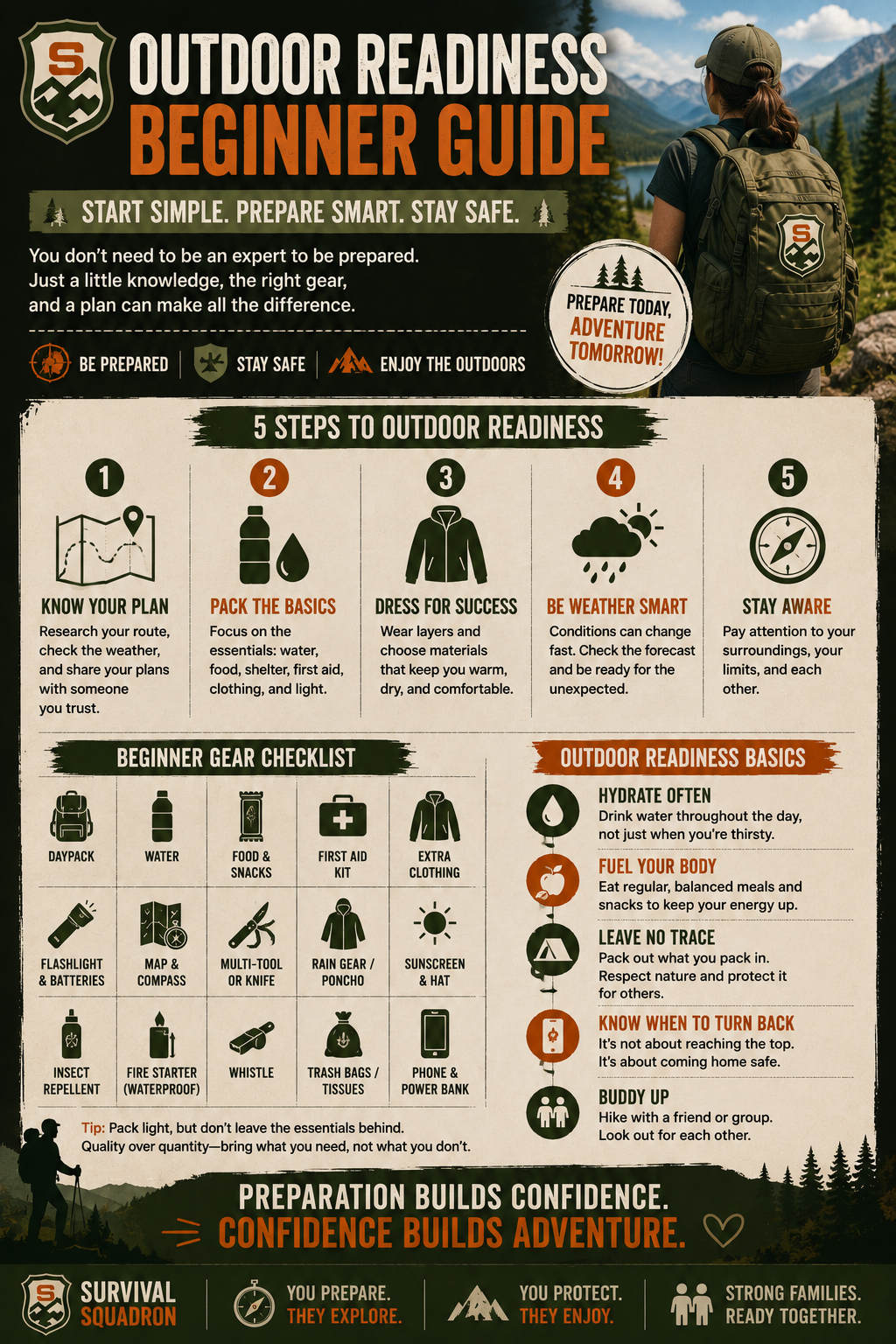
In this beginner's guide, we'll cover the essential steps to outdoor readiness, the gear worth carrying, and practical habits that help keep adventures safe and enjoyable.
Why Outdoor Readiness Matters
Many outdoor emergencies don't happen because people lack courage or enthusiasm.
They happen because small details were overlooked.
A forgotten water bottle.
A sudden weather change.
A trail that takes longer than expected.
A minor injury without a first aid kit nearby.
Outdoor preparedness isn't about expecting disaster. It's about reducing risk and increasing your ability to handle unexpected situations calmly and effectively.
Prepared hikers, campers, and adventurers tend to make better decisions because they have the tools and knowledge needed to adapt when conditions change.
Practical Tip
Before every outdoor trip, ask yourself one simple question: "What if I need to stay out longer than planned?"
Step 1: Know Your Plan Before You Go
One of the most important outdoor safety habits starts before you ever leave home.
Take time to:
Research your destination
Review trail maps
Check local regulations
Understand the terrain
Share your plans with someone you trust
Knowing where you're going and when you expect to return can make a significant difference if something doesn't go according to plan.
According to search and rescue organizations, many outdoor incidents become more complicated when nobody knows where a person intended to travel.
Practical Tip
Leave a trip plan with a family member or friend that includes your route, destination, and expected return time.
Step 2: Pack the Basics
You don't need a giant backpack filled with survival gear to be prepared.
In fact, beginners often benefit from focusing on essentials rather than quantity.
Basic outdoor readiness supplies include:
Water
Food and snacks
First aid kit
Flashlight or headlamp
Extra clothing
Navigation tools
Communication device
Emergency signaling tools
A compact emergency kit can provide valuable peace of mind without adding significant weight to your pack.
For those looking for an easy way to cover several preparedness essentials at once, the 14-in-1 Emergency Survival Kit with Tactical First Aid Tools is a practical option for hikers, campers, and outdoor enthusiasts who want essential emergency tools and first aid supplies readily available.
Practical Tip
Pack light, but don't leave the essentials behind. Focus on quality and usefulness rather than carrying unnecessary gear.
Step 3: Dress for Success
Weather conditions can change quickly, especially in mountainous or remote areas.
The right clothing helps regulate body temperature, protect against the elements, and improve comfort throughout your trip.
A few guidelines include:
Dress in layers
Choose moisture-wicking materials
Carry a waterproof outer layer
Bring extra clothing when conditions are uncertain
Cotton may feel comfortable initially, but it can retain moisture and become uncomfortable in changing conditions.
Layering allows you to adapt as temperatures rise or fall throughout the day.
Practical Tip
Always bring at least one extra layer, even if the forecast looks perfect.
Step 4: Be Weather Smart
Weather is one of the most common factors involved in outdoor emergencies.
Conditions can change rapidly, sometimes within a matter of minutes.
Before heading outdoors:
Check the forecast
Monitor changing conditions
Understand local weather patterns
Prepare for temperature changes
Being weather-aware doesn't mean canceling every adventure. It means making informed decisions based on current conditions.
As outdoor professionals often remind newcomers:
There is no such thing as bad weather, only inadequate preparation.
Practical Tip
Download weather forecasts before leaving areas with reliable cell service.
Step 5: Stay Aware of Your Surroundings
Situational awareness is one of the most valuable outdoor skills you can develop.
Pay attention to:
Trail markers
Changing weather
Physical fatigue
Water consumption
Nearby hazards
Group members
Many outdoor incidents begin with small problems that go unnoticed until they become larger challenges.
Staying aware allows you to address issues early.
Practical Tip
Take periodic breaks to evaluate how you and your group are feeling physically and mentally.
A Beginner's Outdoor Gear Checklist
While every trip is different, most beginners should consider carrying:
Essentials
Daypack
Water
Food and snacks
First aid kit
Extra clothing
Flashlight or headlamp
Navigation
Map
Compass
GPS device or phone
Safety Items
Whistle
Waterproof fire starter
Multi-tool or knife
Rain gear or poncho
Comfort and Protection
Sunscreen
Hat
Insect repellent
Trash bags or tissues
Portable power bank
You don't need every piece of equipment available on the market. Start with the basics and build your kit as your experience grows.
Practical Tip
Review your gear after every trip and make notes about what you used, what you didn't use, and what you wish you had brought.
Outdoor Readiness Habits That Make a Difference
Preparedness isn't just about gear.
The most successful outdoor adventurers develop habits that support safety and resilience.
Hydrate Often
Drink water consistently throughout the day rather than waiting until you feel thirsty.
Fuel Your Body
Regular meals and snacks help maintain energy, focus, and decision-making ability.
Leave No Trace
Pack out everything you bring in and help preserve outdoor spaces for future visitors.
Know When to Turn Back
One of the most important outdoor skills is recognizing when conditions no longer support your original plan.
Reaching the destination is optional.
Getting home safely is not.
Buddy Up
Whenever possible, explore with a friend or group. Shared experiences are often safer and more enjoyable.
Preparation Builds Confidence
Many people delay outdoor adventures because they worry they don't know enough or don't have the perfect gear.
The truth is that confidence grows through preparation and experience.
Every hike teaches something.
Every camping trip builds skills.
Every adventure creates opportunities to learn.
You don't need to be an expert to get started.
You simply need a willingness to prepare, learn, and respect the environment you're exploring.
Final Thoughts
Outdoor readiness isn't about carrying the most gear or mastering advanced survival techniques.
It's about making smart decisions before problems occur.
Know your plan.
Pack the essentials.
Monitor the weather.
Stay aware.
Continue learning.
When you combine preparation with experience, outdoor adventures become safer, more enjoyable, and more rewarding.
Because preparation builds confidence.
And confidence builds adventure.