When most people think about emergency preparedness, they picture adults building emergency kits, creating evacuation plans, or storing supplies. But there's an important piece of the preparedness puzzle that often gets overlooked – helping kids understand what to do when something unexpected happens.
The good news is that preparing children for emergencies doesn't have to be scary.
In fact, preparedness can have the opposite effect. When children know what to do, who to contact, and where to go, they often feel more confident and secure. Instead of worrying about the unknown, they have a plan.
Think of preparedness like teaching a child to ride a bike. At first, they may feel uncertain. But with practice, knowledge, and support, confidence grows. Emergency preparedness works much the same way.
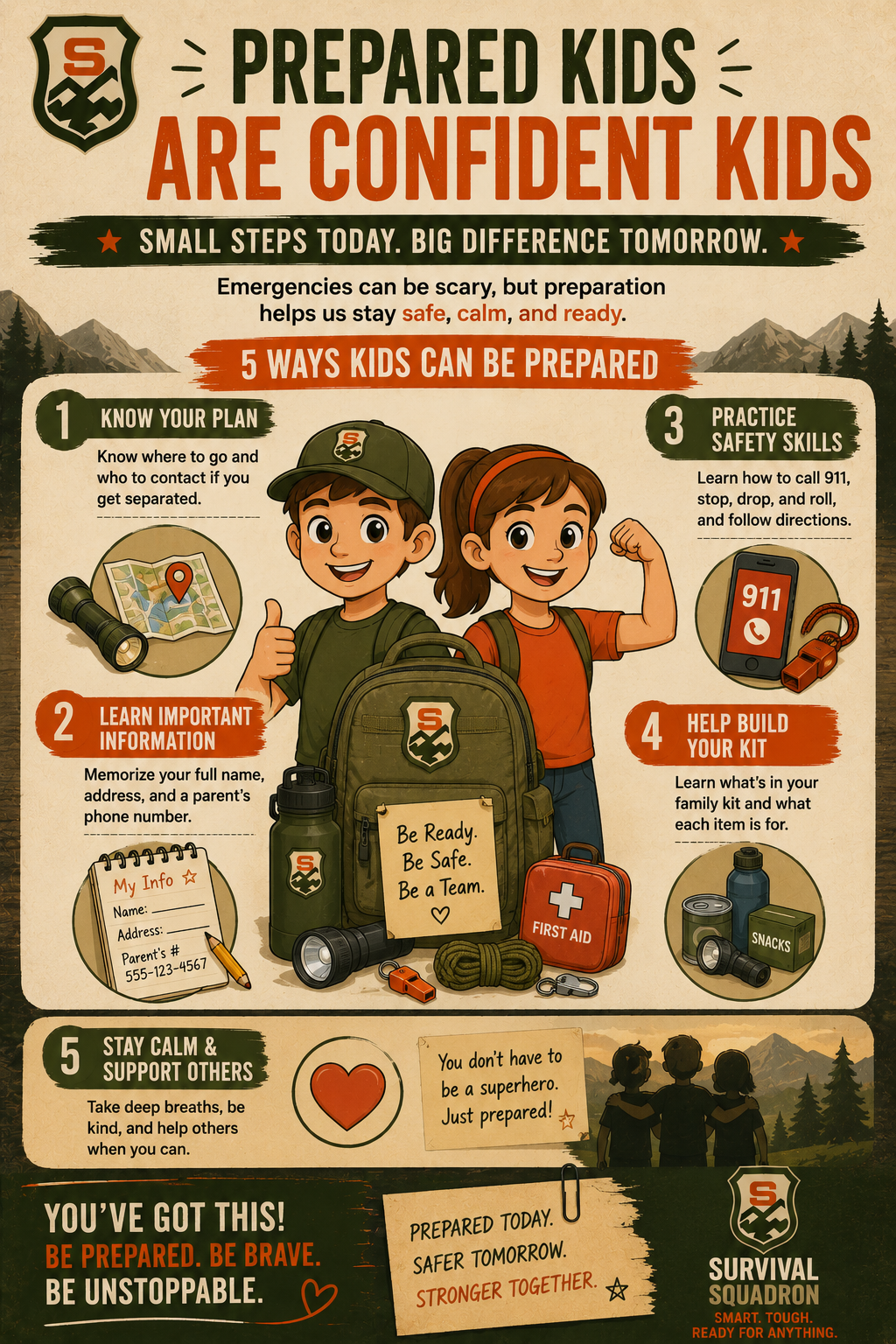
Here are five simple ways to help children become more prepared, more confident, and more resilient when emergencies occur.
1. Help Kids Know the Family Plan
Imagine a child becoming separated from their family during a community event, severe storm, or emergency evacuation.
Would they know what to do?
One of the most important things children can learn is the family's emergency plan. They should understand:
Where to go if family members become separated
Safe places to meet
Who they can contact for help
How to recognize trusted adults
Children don't need to memorize complex emergency procedures. They simply need clear, age-appropriate instructions they can remember under stress.
According to preparedness experts, having a family emergency plan significantly improves response and recovery during emergencies.
Practical Tip
Review your family emergency plan several times each year and turn it into a simple conversation rather than a formal lesson.
2. Teach Important Personal Information
Here's a question every parent should ask:
Could your child tell a first responder their full name, address, and a parent's phone number?
Many younger children cannot.
Teaching basic personal information gives children an important tool if they ever need assistance.
Start with:
Full name
Home address
Parent or guardian names
Phone numbers
Emergency contact information
For younger children, consider creating a small emergency information card they can keep in a backpack or wallet.
As author and educator Mr. Rogers often reminded parents:
"Knowledge can make a fearful thing less frightening."
Helping children learn important information gives them confidence rather than anxiety.
Practical Tip
Practice phone numbers through games, songs, or repetition during everyday activities.
3. Practice Basic Safety Skills
Preparedness isn't just about supplies – it's about skills.
Children should learn simple actions they can take during emergencies, such as:
How to call 911
When to seek help from trusted adults
Basic fire safety procedures
Stop, drop, and roll
Following instructions during emergencies
These skills can be taught gradually over time.
The goal isn't perfection. The goal is familiarity.
When children have practiced a skill before they need it, they're more likely to remain calm and respond appropriately.
Practical Tip
Use role-playing exercises to practice emergency situations in a safe, low-stress environment.
4. Let Kids Help Build the Family Emergency Kit
Many children become interested in preparedness when they can participate.
Instead of treating emergency supplies as something only adults manage, invite children to help.
Show them:
Where emergency supplies are stored
What items are included
How flashlights work
Why water is important
What first aid supplies are used for
When children understand the purpose of emergency equipment, it becomes less mysterious and more reassuring.
Research in child development consistently shows that participation increases confidence and retention.
Preparedness becomes something they understand rather than something they fear.
Practical Tip
Allow children to help choose a few comfort items for the family emergency kit, such as a favorite book, small game, or stuffed animal.
5. Teach Kids to Stay Calm and Support Others
One of the most valuable preparedness lessons has nothing to do with gear.
It's learning how to stay calm.
Children should understand that emergencies can feel stressful, but there are ways to manage those feelings.
Teach them to:
Take slow, deep breaths
Listen carefully to instructions
Focus on the next step
Show kindness to others
Ask for help when needed
Preparedness isn't about creating fearless children.
It's about helping children develop resilience.
As speaker and author Mary Holloway has said:
"Resilience is knowing that you are the only one that has the power and the responsibility to pick yourself up."
Preparedness helps build that resilience one small step at a time.
Practical Tip
Practice simple breathing exercises together so children already know how to use them during stressful situations.
Small Steps Today Create a Big Difference Tomorrow
One of the biggest misconceptions about preparedness is that it has to be complicated.
It doesn't.
You don't need lengthy drills, expensive equipment, or hours of training.
You simply need to start.
Teach your child your family plan. Help them memorize important information. Practice basic safety skills. Let them participate in preparedness activities. Encourage calm, confident thinking.
Each small step builds knowledge.
Each lesson builds confidence.
And each conversation helps children understand that preparedness isn't about being afraid of emergencies – it's about knowing how to respond when life becomes unpredictable.
Final Thoughts
Prepared kids are confident kids.
When children know what to do, who to contact, and how to respond, they gain more than emergency preparedness skills. They gain confidence, resilience, and peace of mind.
The goal isn't to turn children into emergency experts.
The goal is to help them feel capable, informed, and ready.
Because preparedness isn't about fear.
It's about helping families face the future with confidence – together.