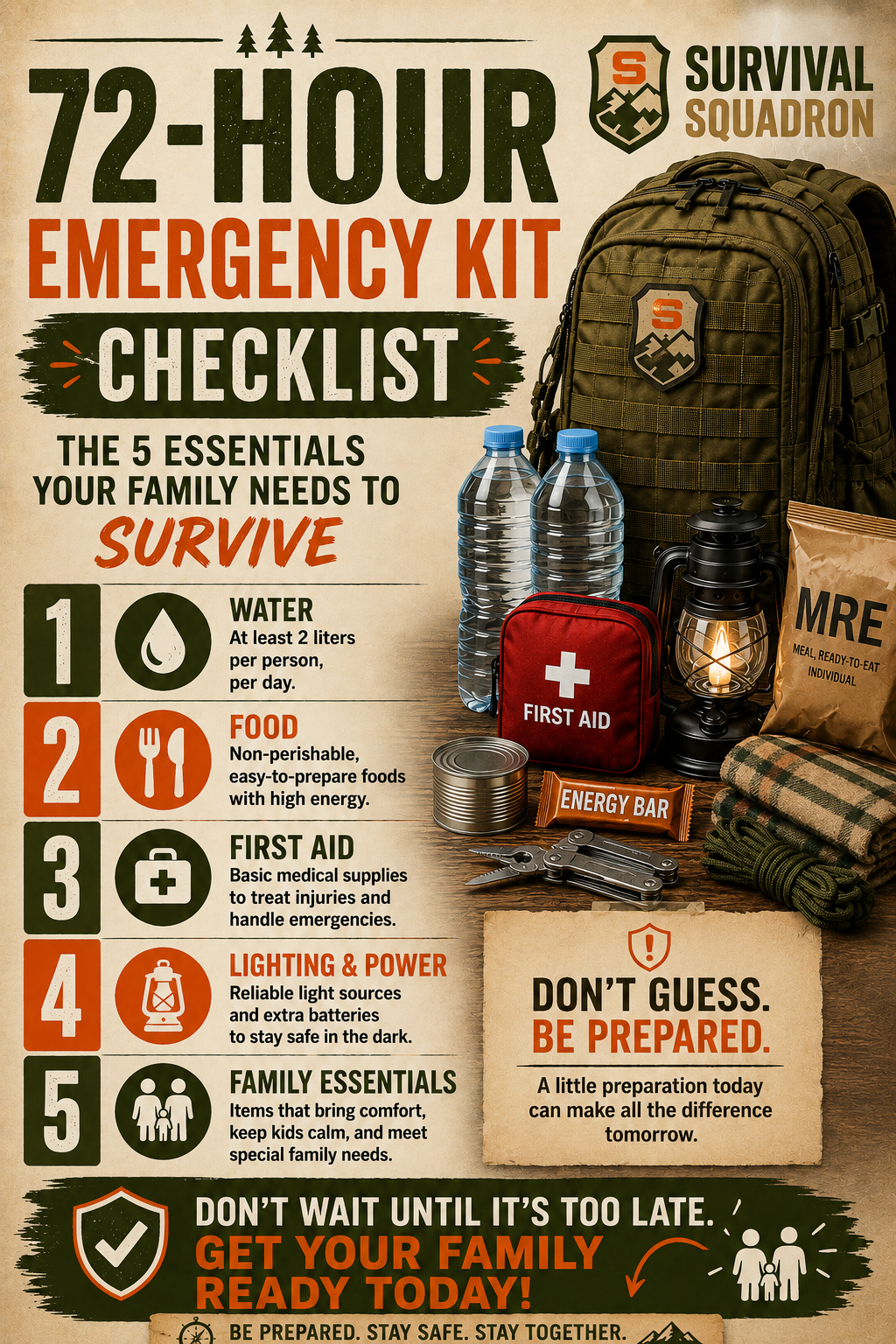
When people hear the words emergency kit, they often picture shelves packed with expensive gear, military-grade gadgets, and enough supplies to survive in the wilderness for six months. But real preparedness usually looks a lot simpler than that.
Think of it like building a campfire. You don’t start with a roaring blaze—you start with a single spark. A flashlight. A few bottles of water. A simple plan.
That’s how lasting preparedness is built: one practical step at a time.
In this guide, you’ll learn what to include in a family emergency kit, how to keep costs manageable, and how to store supplies without turning your home into a warehouse. Most importantly, you’ll see why you don’t need a “perfect” setup to begin.
Start Small: Preparedness Begins With the Basics
Here’s the truth most people don’t hear often enough: you do not need to build a complete 72-hour emergency kit overnight.
In fact, one of the smartest ways to prepare is to start with just two essentials:
Water
A reliable flashlight
That alone already puts you ahead of most households.
From there, add one or two items each week. Preparedness is less about buying everything at once and more about building reliable habits over time.
According to a FEMA preparedness survey, many Americans avoid emergency planning because they believe it’s too expensive or overwhelming. The good news? A solid family emergency kit can be built gradually using affordable, everyday items.
“Preparedness is empowering, not alarming.” — commonly echoed by emergency management professionals nationwide.
Practical Tip
Set a small monthly preparedness budget—even $10–$20 helps you build consistently without financial stress.
Water Comes First—And It Doesn’t Have to Be Complicated
If there’s one area to prioritize first, it’s water.
A general rule is to store one gallon of water per person per day for at least three days. Families with children, pets, or hotter climates may need more.
But don’t let the numbers intimidate you.
You don’t need specialty containers right away. Start with sealed bottled water from the grocery store or reuse food-grade containers safely. Store them in a cool, dark location and rotate supplies every 6–12 months.
The CDC consistently identifies access to clean drinking water as one of the most critical needs during disasters and infrastructure disruptions.
How to Save Money
Buy water during grocery sales
Reuse sturdy food-grade containers
Add a basic water filter later instead of immediately purchasing expensive systems
Practical Tip
Write the storage date directly on each container with a permanent marker so rotation stays simple.
Smart Emergency Food Storage Without Overspending
Emergency food doesn’t have to mean freeze-dried meals and giant buckets of survival rations.
In most cases, your best emergency food supply starts with foods your family already eats:
Peanut butter
Granola bars
Canned soups
Tuna or chicken packets
Trail mix
Crackers
Oatmeal
The key is choosing shelf-stable, ready-to-eat foods that require little or no cooking.
A common mistake is buying unfamiliar “survival food” that nobody actually wants to eat. In stressful situations, familiar foods matter more than tactical packaging.
“The best emergency food is the food your family will actually eat.” — preparedness instructors often emphasize this principle for long-term sustainability.
How to Keep Storage Compact
Use stackable plastic bins
Store food under beds or in closet corners
Rotate pantry items into daily use before they expire
Practical Tip
Build your emergency food supply during normal grocery trips by adding just one extra shelf-stable item each week.
Lighting and Power: Simple Tools That Make a Big Difference
When the power goes out, even familiar spaces can become difficult to navigate safely.
A dependable flashlight is one of the highest-value preparedness items you can own. Headlamps are especially useful because they keep your hands free while cooking, checking supplies, or helping family members.
Battery-powered lanterns can also provide room lighting without the fire risks associated with candles.
Portable power banks are another affordable addition that can keep phones charged during outages.
Budget-Friendly Strategy
Skip ultra-expensive tactical lighting at first. A reliable mid-range flashlight with extra batteries is often more practical than high-end gear most families will never fully use.
Practical Tip
Store batteries with the device they belong to so everything stays ready together.
The Medical Supplies Most Families Forget
Medical preparedness doesn’t require a professional trauma setup to be useful.
A practical family emergency kit should include:
Bandages
Gauze
Medical tape
Antiseptic wipes
Pain relievers
Prescription medications
Gloves
Emergency blankets
Many emergency experts also recommend learning basic first aid skills alongside building supplies. Equipment matters, but knowledge matters more.
The American Red Cross reports that immediate first aid during emergencies can significantly reduce injury severity before professional responders arrive.
Keep Costs Low
Buy generic medications when possible
Watch for first-aid kit sales during back-to-school season
Build your own kit instead of buying oversized pre-made kits
Practical Tip
Check expiration dates twice a year when you change clocks for daylight saving time.
Communication Tools Matter More Than Most People Realize
During emergencies, information becomes incredibly valuable.
A battery-powered or hand-crank radio can help you stay informed if internet or cell service becomes unreliable. Printed emergency contact lists are also important because many people rely entirely on phones for stored numbers.
Simple signaling tools like whistles and flashlights can also help attract attention if needed.
Preparedness isn’t about expecting the worst—it’s about reducing confusion when normal systems are disrupted.
Space-Saving Tip
Store important documents, emergency contacts, and cash together in a waterproof zipper pouch.
Practical Tip
Choose one out-of-state family contact everyone can check in with during emergencies.
Preparedness Is a Mindset, Not a Shopping List
This may be the most important part of all.
Preparedness isn’t about fear. It’s about confidence.
You don’t need a perfect setup. You don’t need a bunker. And you certainly don’t need to spend thousands of dollars before taking your first step.
What matters most is consistency:
Store some water
Add a flashlight
Build gradually
Rotate supplies
Practice your plan
Small actions today can make difficult moments far more manageable tomorrow.
“By failing to prepare, you are preparing to fail.” — Benjamin Franklin
Final Thoughts
A family emergency kit should bring peace of mind—not pressure.
The best kits are practical, affordable, and built steadily over time. Start with the essentials. Focus on reliable basics. Use the space you already have. And remember that preparedness is not about living in fear of what might happen—it’s about being ready if it does.
Even a small amount of preparation can make a major difference when it matters most.