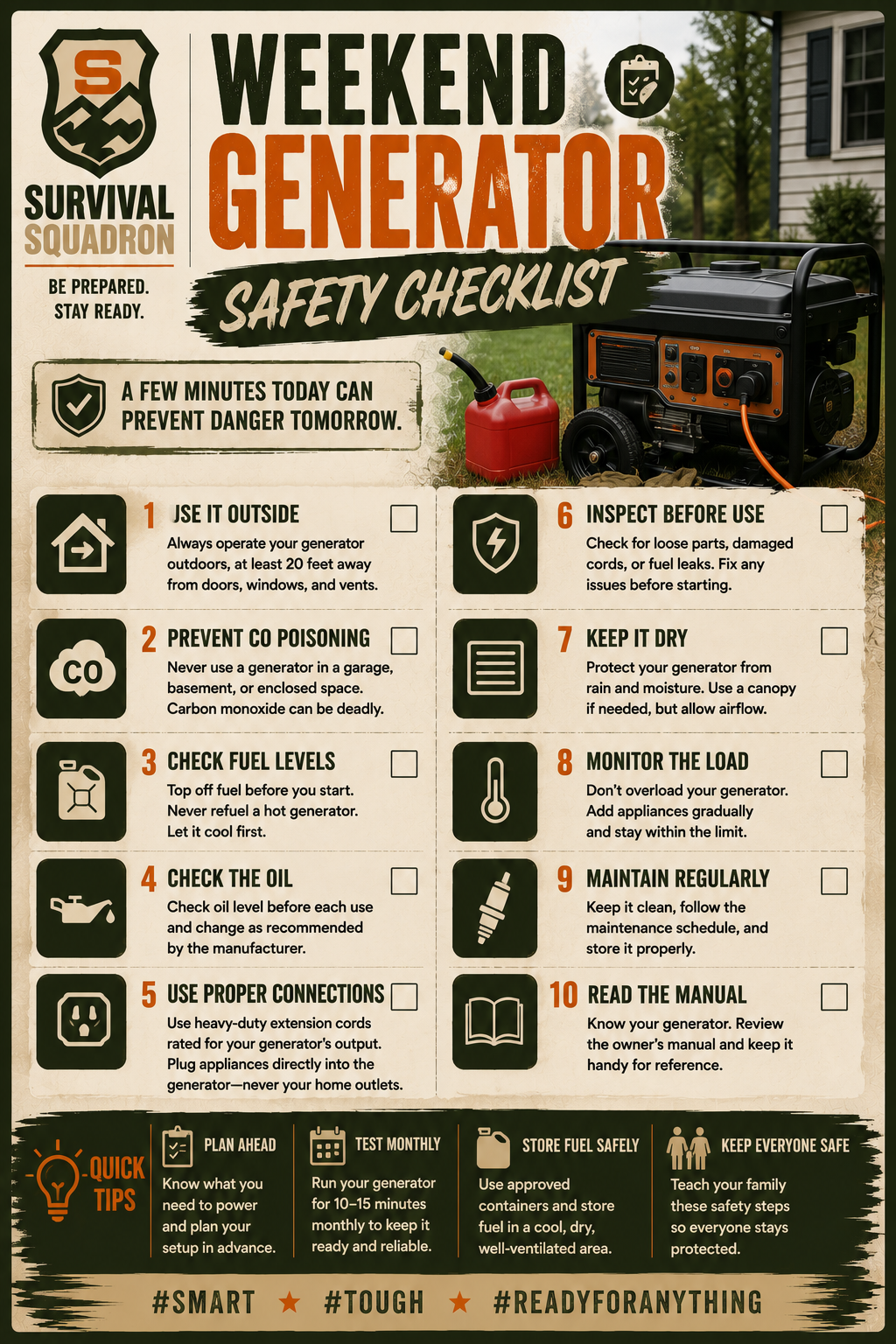
A portable generator can be one of the most valuable tools you own during a power outage.
It can keep your refrigerator running, power essential medical equipment, charge phones, and provide much-needed comfort when the grid goes down. But like any powerful tool, a generator must be used safely.
Think of generator safety like wearing a seatbelt. It only takes a few extra minutes, but those simple precautions can prevent serious accidents when they matter most.
The good news is that staying safe doesn't require advanced technical knowledge. By following a few basic practices every time you use your generator, you can protect your family, your home, and your equipment.
This weekend, take a few minutes to review this generator safety checklist. It's time well spent.
Why Generator Safety Matters
Portable generators save lives during emergencies, but improper use can create serious hazards.
Carbon monoxide exposure, electrical shock, fire, and equipment damage are all preventable when you operate your generator correctly.
Preparedness isn't just about owning the right equipment.
It's about knowing how to use it safely.
A few simple habits can help ensure your generator is ready to perform when you need it most.
Practical Tip
Choose one weekend each month to inspect and test your generator so it's always ready before the next outage.
1. Always Use Your Generator Outdoors
One of the most important generator safety rules is also the simplest.
Never operate a portable generator inside your home, garage, basement, shed, or any enclosed space.
Generators produce carbon monoxide, an odorless, colorless gas that can quickly become deadly if it accumulates indoors.
Instead, place your generator outdoors in an open area, well away from doors, windows, and vents.
Fresh air is essential for both safe operation and proper engine performance.
Practical Tip
Before storm season arrives, identify a safe outdoor location where you'll place your generator during an outage.
2. Prevent Carbon Monoxide Poisoning
Carbon monoxide is often called the "silent killer" because you can't see, smell, or taste it.
Even partially enclosed spaces can allow dangerous levels of carbon monoxide to build up.
The safest approach is simple:
- Operate your generator outside.
- Keep it away from openings into your home.
- Install working carbon monoxide detectors inside your house.
Preparedness includes protecting your family from hazards you can't see.
Practical Tip
Test your home's carbon monoxide alarms every month and replace batteries as recommended by the manufacturer.
3. Check Fuel Levels Before You Start
Running out of fuel during an outage is inconvenient.
Refueling a hot generator can be dangerous.
Before each use:
- Check the fuel level.
- Top off the tank if needed.
- Never add fuel while the engine is running or still hot.
Allow the generator to cool before refueling to reduce the risk of fire.
Practical Tip
Keep approved fuel containers stored safely and rotate gasoline regularly to maintain freshness.
4. Check the Oil
Like any engine, your generator depends on proper lubrication.
Low oil levels can damage the engine and shorten its lifespan.
Before starting your generator:
- Check the oil level.
- Add oil if needed.
- Follow the maintenance schedule in your owner's manual.
A two-minute inspection can prevent costly repairs later.
Practical Tip
Keep the correct type of engine oil stored alongside your generator so it's always available when needed.
5. Use Proper Connections
One of the most common mistakes homeowners make is connecting generators improperly.
Use heavy-duty extension cords rated for your generator's output.
Never plug a portable generator directly into a household wall outlet unless your home has a professionally installed transfer switch designed for generator use.
Proper connections protect both your home's electrical system and the utility workers restoring power.
Practical Tip
Inspect extension cords before every use and replace any that show signs of damage or wear.
6. Inspect Your Generator Before Every Use
Your generator deserves a quick inspection before each start-up.
Look for:
- Loose bolts
- Damaged cords
- Fuel leaks
- Cracked hoses
- Worn components
Finding small issues early can prevent bigger problems during an emergency.
Practical Tip
Keep a simple maintenance checklist with your generator to track inspections and repairs.
7. Keep It Dry
Generators are built for outdoor use, but that doesn't mean they should operate in heavy rain without protection.
Protect your generator from moisture while maintaining proper airflow.
Never operate it in standing water or expose electrical connections to excessive moisture.
If needed, use a generator canopy specifically designed to provide weather protection without restricting ventilation.
Practical Tip
Have a weather cover or canopy ready before storm season begins.
8. Monitor the Electrical Load
Every generator has a maximum power output.
Exceeding that limit can damage the generator and the devices connected to it.
Instead of plugging everything in at once:
- Prioritize essential appliances.
- Add loads gradually.
- Stay within the generator's rated capacity.
Planning ahead makes power management much easier during an outage.
Practical Tip
Create a list of the appliances you plan to power and calculate their combined wattage before an emergency occurs.
9. Perform Regular Maintenance
Like any piece of equipment, generators perform best when they're maintained regularly.
Routine maintenance includes:
- Cleaning the unit
- Changing the oil
- Replacing air filters
- Inspecting spark plugs
- Running the generator periodically
Regular maintenance improves reliability and extends the life of your equipment.
Practical Tip
Run your generator for 10 to 15 minutes each month to keep internal components lubricated and verify it's operating correctly.
10. Read the Owner's Manual
Every generator is different.
Your owner's manual contains important information about:
- Startup procedures
- Maintenance schedules
- Fuel recommendations
- Load limits
- Safety precautions
Taking time to read it before an emergency helps you operate your generator with confidence.
Practical Tip
Store the owner's manual in a waterproof folder near your generator so it's always easy to find.
Four Extra Tips for Safer Generator Use
Beyond the basics, a few additional habits can make generator ownership even safer.
Plan Ahead
Know which appliances you'll power and have your extension cords and fuel ready before severe weather arrives.
Test Monthly
Running your generator regularly helps identify problems before they're discovered during an outage.
Store Fuel Safely
Keep gasoline in approved containers in a cool, dry, well-ventilated location away from living spaces and ignition sources.
Teach the Whole Family
Make sure everyone in your household understands basic generator safety, including where it's operated and why carbon monoxide precautions are so important.
Final Thoughts
A generator is an excellent preparedness tool, but it's only as safe as the person operating it.
Taking a few minutes to inspect your equipment, follow basic safety practices, and maintaining it regularly can help prevent accidents and ensure it's ready when the lights go out.
Preparedness isn't just about having backup power.
It's about using it wisely.
Spend a little time on generator safety today, and you'll have greater confidence the next time your family needs it most.